

Vehicle Thermal Management
Know-how in Theory, Measurement Techniques and Testing
Table of content
Lecturer:
Dr.-Ing. Timo Kuthada, FKFS
Dr.-Ing. Peter Ambros, TheSys GmbH
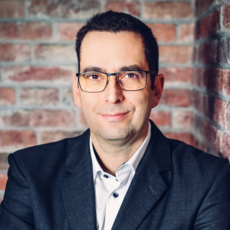
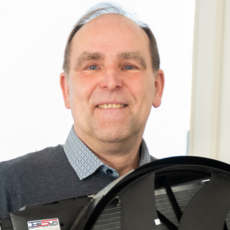
More information about Dr. Kuthada and Dr. Ambros
Co-lecturers:
- Daniel Gehringer, FKFS, Center for Climate Comfort
- Roozbeh Razzaghi, IFS University of Stuttgart
In cooperation with

Target Group
This course is targeted to professionals who work or who are interested in the area of vehicle thermal management and cabin comfort. The professionals can be technicians or engineers who either are newcomers or who simply wish to learn more about these topics. For young professionals the course provides an overview over thermal components and system solutions for the whole range of vehicle thermal management as well as guidelines for implementation of modern testing and simulation tools into the development process.
The course focuses on the fundamentals of thermodynamics, covering measurement techniques as well as computational approaches. The various facets of the course content are presented as both, theoretical lectures and practical training especially in the climatic wind tunnel
Course Objectives
The course is designed to provide a detailed understanding of vehicle thermal management in simulation and experiment. The participants will be trained to be able to carry out respective development work at car manufacturers and suppliers under consideration of the various interfaces to other disciplines.
Objective 1:
Understand basic physics and relationships for vehicle thermal management; apply fundamental aerodynamic equations on standard flow situations; assess aerodynamic coefficients and aerodynamic results; influences on vehicle drag and lift as well as vehicle dynamics.
Objective 2:
Gain an overview over the wide range of thermal components and thermal system solutions in modern series vehicles.
Objective 3:
Understand the mode of operation of different components and systems of a vehicle thermal management.
Objective 4:
Learn to conduct thermal management investigations under experimental conditions in our modern wind tunnel facilities as well as to evaluate the measured data.